You've got the deck and the tarps, so the real question is: where does the steady, good-paying step deck freight actually come from? If you're chasing one-off loads on a board, you already know the answer isn't there consistently.
Step deck work rewards owner-operators who can secure relationships and repeat lanes. Here's how to actually build that.
What Pays Best on a Step Deck
Step deck (drop deck) freight lives in the gap between flatbed and specialized heavy haul. The loads that tend to pay well and run steady:
- Machinery and equipment — skid steers, small excavators, industrial gear that clears legal height on a lower deck
- Building materials — steel, trusses, lumber, precast, roofing bundles
- Ag and construction — implements, tractors, pipe, culverts
- Oversize-light — loads that are tall or awkward but still permit-friendly
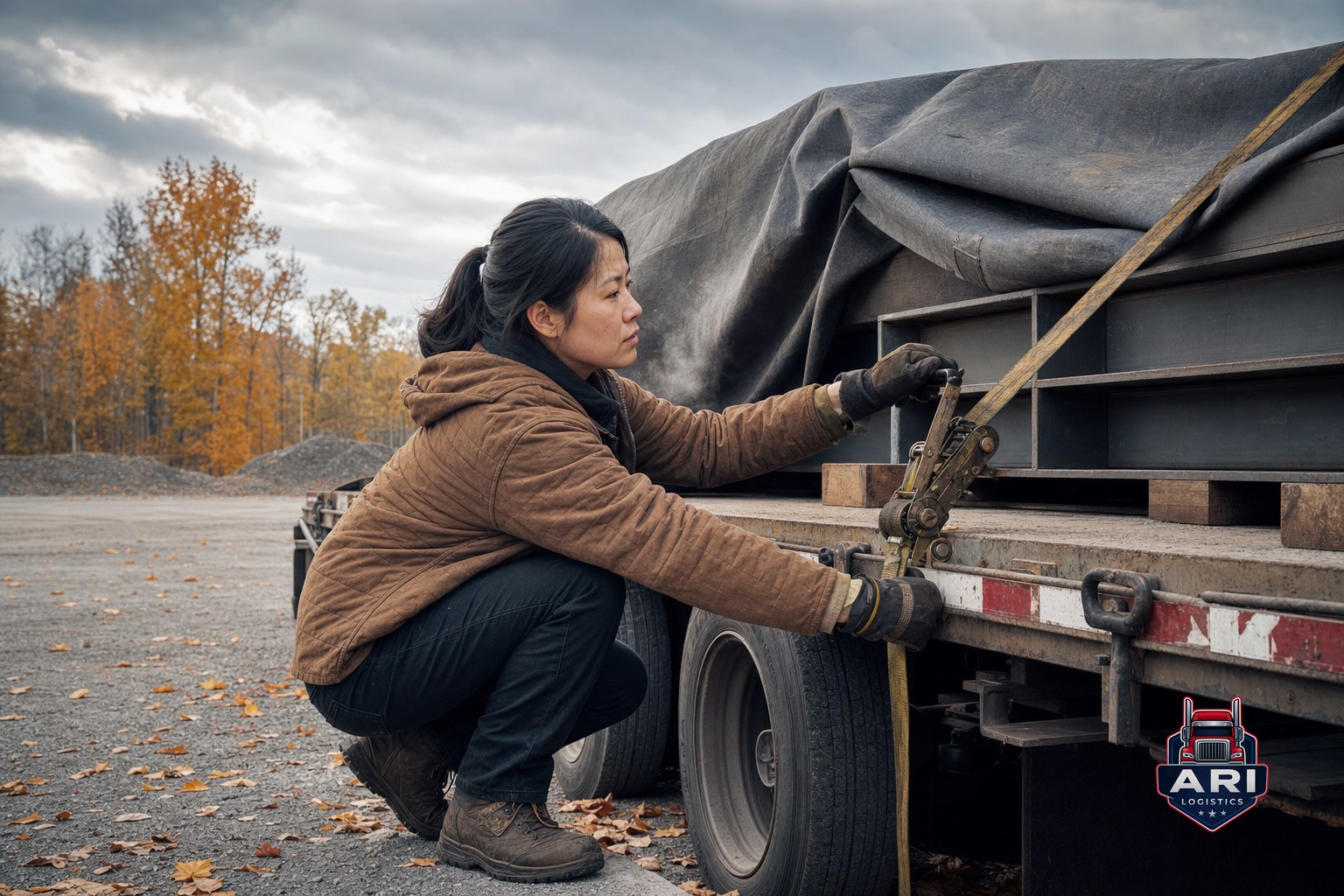
The premium comes from the work, not just the miles. Tarping, strapping, chaining, and knowing how to secure an odd load correctly are what separate a step deck rate from a dry van rate. If you're good with securement, you're worth more.
Where Steady Step Deck Jobs Come From
Reliable step deck freight almost always traces back to shipper and broker relationships and lanes that repeat week after week. A single truck cold-calling brokers can get there eventually, but it's slow and the rates reflect that you're an unknown.
You've got three broad paths:
- Run your own authority and build every relationship yourself — full control, but you carry all the compliance, billing, and sales work
- Self-dispatch virtual-carrier apps where you still hunt and negotiate every load alone
- Lease on to an established carrier and run under its authority, plugging into freight volume you couldn't reach solo
For most step deck owner-operators, the third path solves the exact problem — load access — without giving up the freedom to choose your work.
How Running Under a Carrier's Authority Helps
ARI is a motor carrier, not a broker. When you lease on, you run under ARI's DOT/MC authority — you don't need your own, and you can't run your own authority with ARI. That's the trade, and for step deck it's usually a good one.
Because ARI moves real volume and already has established shipper and broker relationships and steady lanes, running under that authority opens access to better step deck loads than you'd typically land as a lone truck. You keep 82% of gross linehaul, and a dedicated dispatcher — capped at seven trucks — learns your lanes and negotiates rates instead of you fighting a load board at midnight.
There's also no forced dispatch. You choose the loads, the routes, and your home time. If tarped machinery is your bread and butter, you run tarped machinery.
Found your own load? Bring it.
If you know a shipper or find a step deck load yourself, tell your dispatcher. ARI runs the broker's or customer's credit and, if it's approved, books it under ARI's authority. You keep the relationships you build; ARI just handles the paperwork behind them.
The Numbers That Matter to a Step Deck Operator
Step deck runs can mean waiting at a job site or a plant, so cash flow matters. A few things that keep you moving:
- Same-day pay — deliver before noon EST and submit paperwork, get paid that business day, no quick-pay fees (many carriers charge 3–5%)
- Zero escrow — ARI holds $0, while some carriers tie up $2,500–$5,000
- Fuel discounts up to $0.45/gallon and a 40% fuel advance at pickup
- Support for all trailer types, so you're never boxed into one kind of freight
If you're weighing how to run your step deck business, it's worth seeing the full picture on owner-operator opportunities and how the numbers actually shake out.
Ready to put your deck on steadier freight without chasing every load yourself? Take a look at what it means to lease on with ARI, or call (888) 600-9098 to talk through your lanes.