If you own a reefer or you're thinking about buying one, the real question is simple: can you keep it loaded with freight that actually pays, and can you run temperature-controlled loads without headaches eating your margin? The short answer is yes — but reefer rewards drivers who run it right.
Why owner-operators run reefer freight
Refrigerated freight tends to stay steadier than dry van through the year. Food moves in every season, and produce, meat, dairy, and frozen goods have to keep moving regardless of the economy. That consistency is the main reason a lot of owner-operators choose reefer.
It also tends to pay better per mile than dry van, because the equipment costs more, the freight is time-sensitive, and fewer trucks can handle it. Your reefer unit burns extra fuel and needs its own maintenance, but the rate usually reflects that.
What to expect from reefer lanes
Reefer runs longer, denser lanes. Produce moves out of the Southeast, California, Texas, and the Pacific Northwest heading to population centers, and there's constant frozen and dairy freight between distribution hubs.
- Longer hauls. Reefer loads often run coast-to-coast or region-to-region, which is good for consistent miles.
- Tighter appointments. Grocery warehouses and cold-storage facilities run strict delivery windows. Miss one and you can sit or get rescheduled.
- Detention is real. Loading and unloading temp-controlled freight takes time. Know the shipper before you commit.
- Backhaul matters. Some produce regions are heavy outbound and light inbound. A dispatcher who knows the lanes keeps you from deadheading home.
How to run reefer loads profitably
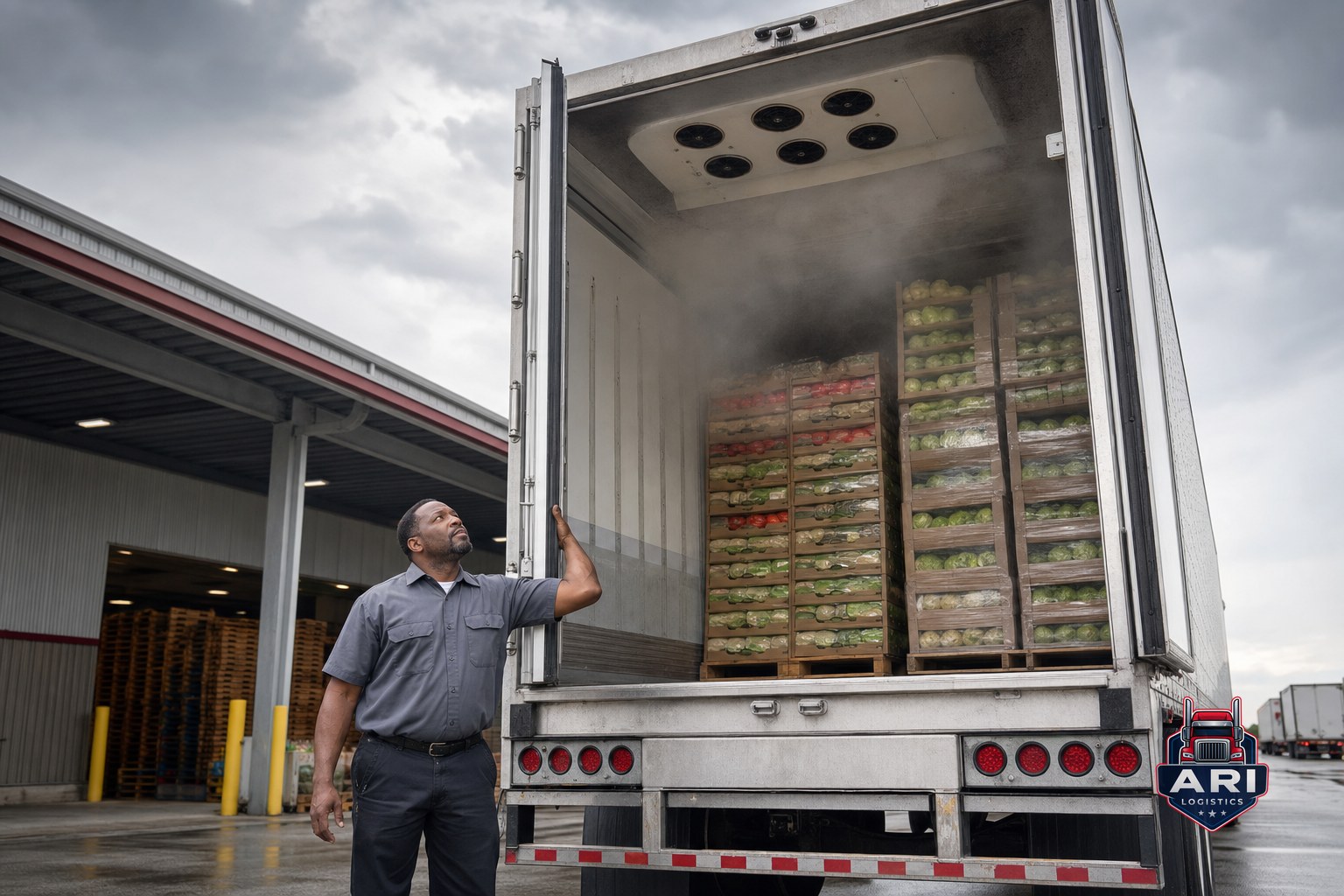
The freight only pays if you protect it. A rejected load at the receiver can wipe out the profit on the whole run.
Protect the product
- Pre-cool the trailer to the set temp before loading — never load into a warm box.
- Confirm the setpoint and mode (continuous vs. cycle-sentry) on the rate confirmation, not just from memory.
- Keep your reefer downloads. Temperature records are your proof if a receiver claims the load ran out of spec.
- Watch your fuel. The reefer unit has its own tank and its own thirst. Build it into your cost per mile.
Keep the equipment tight
Reefer maintenance is non-negotiable — belts, coolant, and airflow inside the box. A breakdown with a loaded reefer is a claim waiting to happen, so stay ahead of service intervals.
Reefer with your own authority vs. leasing on
You can chase reefer freight with your own DOT authority, but that means running your own load board search, negotiating every rate, and carrying your own insurance and back-office load. Reefer's tight appointments and detention make that a lot to juggle solo.
Leasing on to a motor carrier is the other path. With ARI, you don't need your own authority — you run under ARI's DOT/MC authority and haul reefer under established shipper and broker relationships. That means access to steadier, better-paying refrigerated lanes than most single trucks can book alone. To be clear: ARI is lease-on only. You run under ARI's authority, not your own.
A few things that matter specifically for reefer owner-operators:
- A dedicated dispatcher (max seven trucks) who knows your lanes and negotiates your rates — not a self-dispatch app where you fend for yourself.
- Same-day pay with no quick-pay fees, which helps when reefer fuel and maintenance hit hard.
- A 40% fuel advance at pickup and fuel discounts up to $0.45/gallon to offset that reefer burn.
- No forced dispatch — you pick the reefer loads and home time that work for you.
- Found your own produce shipper? Bring your own freight — tell your dispatcher, ARI runs the credit and books it under authority.
Reefer rewards drivers who take it seriously and back it with the right operation. If you've got a reefer and want steady, better-paying refrigerated lanes without carrying the whole business on your back, see how ARI's owner-operator program works and start your lease-on with ARI or call (888) 600-9098.