You've heard Conestoga freight pays better than plain flatbed, and you want to know if that's real or just talk. Short answer: it often does pay a premium, but only if you understand why shippers value it and whether your setup can actually pull it.
What a Conestoga actually is
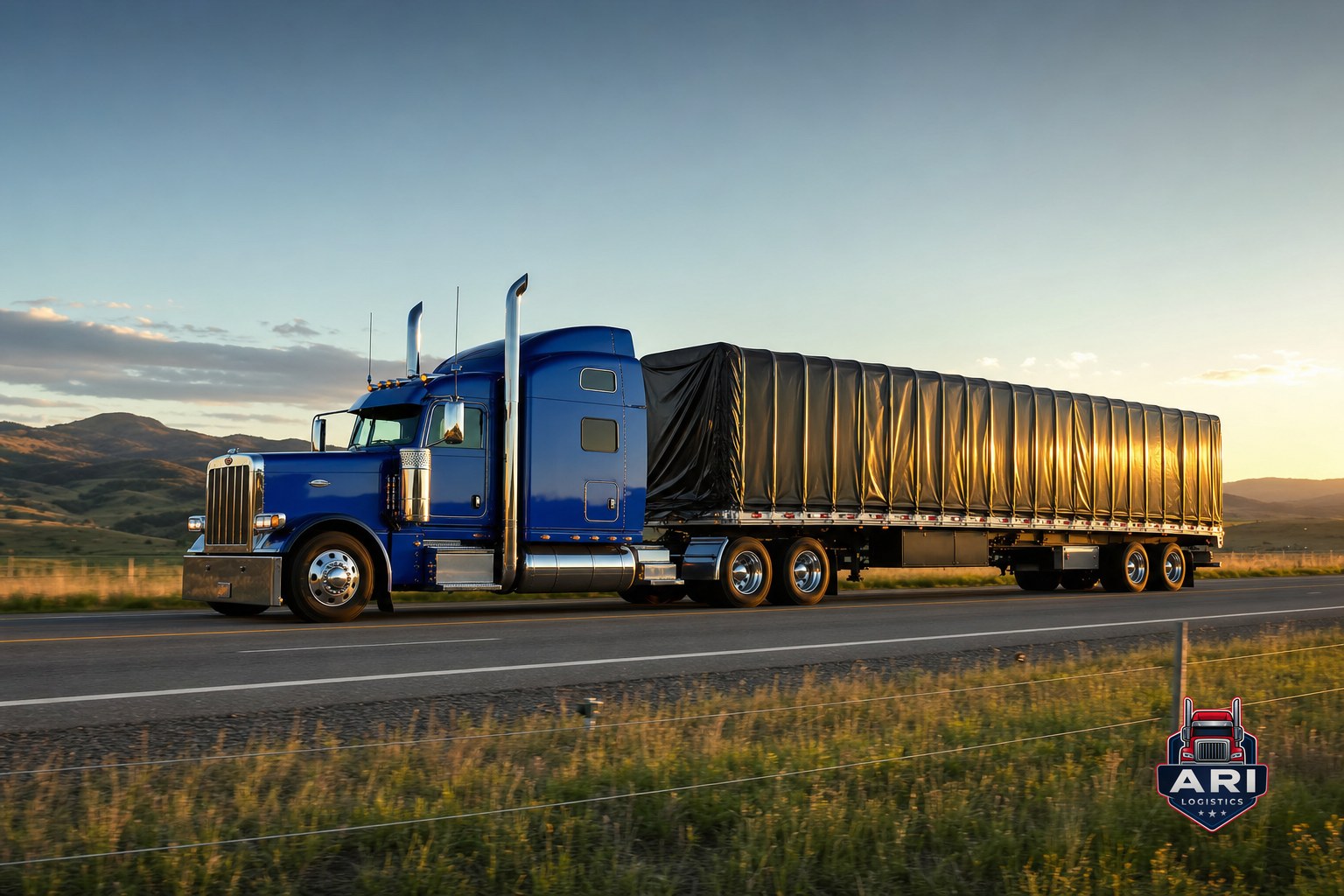
A Conestoga is a flatbed or step deck fitted with a rolling tarp system on a frame that slides the full length of the trailer. Instead of hand-throwing tarps over a load, you pull the cover back like a curtain, load or unload, and roll it closed.
That matters for two kinds of freight:
- Loads that must stay dry but can't ride in a dry van (too tall, too wide, or needs side/overhead loading)
- High-value or sensitive freight where a shipper doesn't want it exposed while it's tarped by hand
Think building materials, machinery, coils, aerospace parts, palletized goods that overhang, and anything a customer wants protected without the labor and risk of manual tarping.
Why Conestoga freight tends to pay more
The premium isn't magic. You're getting paid for solving a problem: you protect the load and cut load/unload time, which shippers of time-sensitive or damage-prone freight will pay for. Fewer trucks are set up for it, so competition on a given lane is thinner than open-deck or van work.
A few honest caveats:
- The equipment is heavier and costs more, which eats into payload and maintenance.
- The tarp system needs upkeep — rollers, straps, and the cover itself wear out.
- Not every lane has steady Conestoga demand, so you don't want to depend on a load board alone to keep it moving.
That last point is where the freight source matters more than the trailer. A premium trailer sitting empty doesn't pay premium rates.
Does it fit a lease-on with ARI?
Yes. ARI runs all trailer types, Conestoga included, so if you own or are buying one you can lease on and haul it under ARI's authority.
Here's the part that decides whether Conestoga work is worth it: keeping it loaded on freight that actually pays the premium. ARI moves real volume and has established shipper and broker relationships, so running under ARI's authority opens access to better loads than you'd typically line up chasing boards on your own. A dedicated dispatcher — capped at seven trucks, so they know your equipment and lanes — negotiates rates and keeps the rolling-tarp freight coming.
You still choose your loads. There's no forced dispatch, so you pick the runs, routes, and home time that work for your business. And if you turn up your own Conestoga customer, you can bring your own freight: tell your dispatcher, ARI runs the broker's or customer's credit, and books it under ARI authority once it's approved.
What you keep
The economics only work if the split does. With ARI you keep a true 82% of gross linehaul — the 18% covers dispatch, compliance, and billing. There's zero escrow (many carriers hold $2,500–$5,000), and same-day pay with no quick-pay fees when you deliver before noon EST and turn in paperwork. On a heavier, higher-maintenance trailer, keeping more of every check and getting paid fast makes a real difference.
To run Conestoga with ARI you'll need the standard fit: a sleeper semi 2000 or newer and DOT-ready, CDL Class A, around two years' experience, a clean record, and 25 or older. You run under ARI's authority — this is lease-on, not your own authority.
The bottom line
Conestoga owner-operator jobs can pay a genuine premium if you keep the trailer loaded on the right freight and control your costs. The trailer gets you in the game; a steady freight pipeline is what makes it profitable.
If you've got the equipment and want it running on better-paying lanes, see how ARI matches owner-operators to freight, then start your lease-on with ARI or call (888) 600-9098.