You've got the truck and you're eyeing heavy haul. The real question is simple: can an owner-operator actually make a living pulling an RGN, and how do you get the loads that make it worth it?
Short answer: yes, but heavy haul rewards operators who know what they're getting into. Here's the honest breakdown.
What RGN and lowboy freight actually is
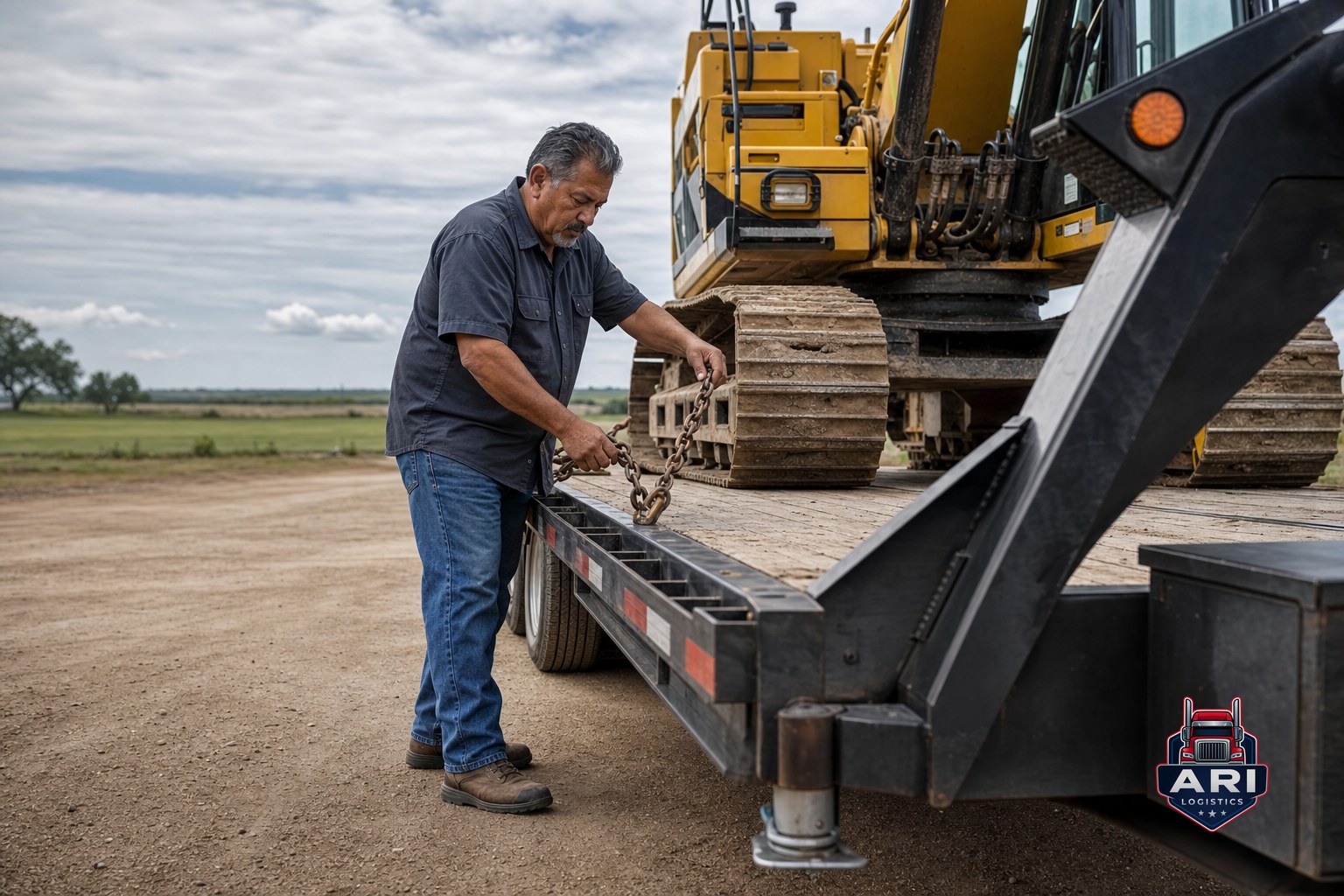
An RGN (removable gooseneck) lets you detach the front of the trailer so the deck drops to the ground and equipment can drive right on. That's what makes it the go-to for tall, heavy, rollable loads.
Typical RGN and lowboy freight includes:
- Excavators, dozers, and other construction iron
- Cranes and lift equipment
- Farm and ag machinery
- Transformers, generators, and industrial gear
- Anything too tall or heavy for a standard flatbed or step deck
Because these loads are specialized, there's less competition than dry van freight and fewer trucks that can legally move them.
Why heavy haul can pay more
RGN work generally commands stronger rates than dry van or reefer. You're moving high-value, oversize freight that not everyone is equipped or permitted to handle, and shippers pay for that capability.
But the higher gross comes with more work. Oversize loads often mean:
- State permits for weight and dimensions
- Pilot/escort cars on wide or long loads
- Route surveys and travel-time restrictions
- Heavier securement and more time on the ground chaining down
The freight pays well, but you earn it. That's why steady access to good RGN lanes matters so much — a truck that sits isn't making that premium rate.
What it takes to run RGN
Beyond the trailer itself, heavy haul asks more of the operator:
- Experience. Knowing how to load equipment, distribute axle weight, and secure a machine safely isn't something you learn on load one.
- Permitting knowledge. Oversize/overweight permits vary by state, and getting them wrong is expensive.
- Patience. Heavy haul runs on tighter travel windows and slower loading.
You also need consistent freight. It's one thing to find a single good RGN load; it's another to keep the truck loaded lane after lane.
Getting the loads: authority vs. leasing on
There are two broad paths in the industry. You can get your own DOT/MC authority and chase heavy-haul freight yourself — which also means running your own permits, insurance, billing, and back-office. Or you can lease on to an established carrier and run under its authority.
That second path is what ARI offers. ARI is a motor carrier, not a broker — you run exclusively under ARI's authority, so you don't carry your own. You cannot run your own authority through ARI, and that's the point: the compliance, billing, and dispatch side is handled so you can focus on hauling.
The upside for RGN operators is access. Because ARI moves real volume and has established shipper and broker relationships, running under its authority opens the door to better heavy-haul freight than most single trucks can line up alone. You also get a dedicated dispatcher (never more than seven trucks) who knows your lanes and negotiates your rates — not a self-dispatch app. See why owner-operators lease on for the full picture.
Found your own heavy-haul customer? Bring it. Tell your dispatcher, ARI runs the credit, and if it clears, it books under ARI's authority.
Getting paid for heavy haul
Heavy-haul loads tie up your time and cash, so pay speed matters. With ARI you keep a true 82% of gross linehaul, there's zero escrow, and delivering before noon EST with paperwork in gets you paid the same business day — no quick-pay fees. A 40% fuel advance at pickup helps cover fuel and permits before you roll.
ARI runs all trailer types, including RGN and lowboy, so you're not boxed into one kind of freight.
If you've got a sleeper truck and the experience to run heavy, browse current owner-operator opportunities or start your lease-on with ARI. Questions first? Call (888) 600-9098 and talk it through.